Swedish Elections and Political Climate
By: Sarah van Bavel
Sep 22, 2026
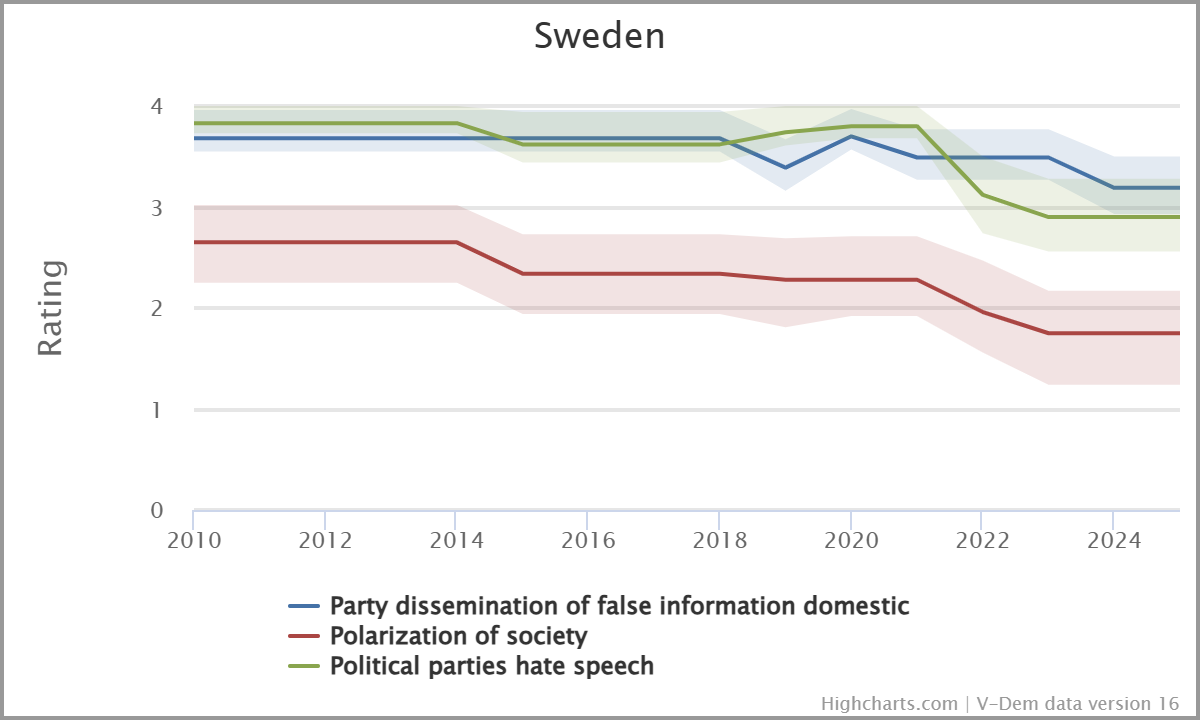
Sweden’s national elections took place September 13. This week’s graph looks at some key aspects that surround the election environment, namely polarization and political parties’ use of hate speech and disinformation.
Sweden’s ranking on the V-Dem Liberal Democracy Index remains one of the highest worldwide and while experts note that that Swedish democracy is not under direct threat, some point to trends worth monitoring.
The graph shows a gradual increase in political parties’ hate speech, disinformation, and societal polarization over the last 15 years; lower scores indicate more frequent hate speech and disinformation, and more severe polarization (the indicators range from 0 to 4). A score of 3 still means hate speech and disinformation occur rarely. A score of 2 for polarization means differences in opinion are noticeable on about half of key issues, causing some clashes.
While the decline in the three indicators is still relatively modest, research shows that, if sustained, these developments mutually reinforce each other and can contribute to gradual democratic backsliding by eroding trust in core democratic institutions.
Looking at some concrete examples from the media, in recent years, hate speech from political parties may have included targeting minorities, using degrading language for political opponents, or calling protesters “beasts”.
There have also been accounts of political parties disseminating false information, such as in 2023, when the far-right Sweden Democrats, whose parliamentary support the government relies on, were exposed for using troll accounts to mass-produce misleading information and attack other politicians.
More broadly, polarization and disinformation are associated with reduced quality of the political debate. Polls after Sweden’s 2022 election point in a similar direction: 40 percent of voters described the campaign as lacking or severely lacking in factual, issue-focused debate.
Ahead of the 2026 election, trade unions, civil society, and human rights organizations appealed to Swedish politicians for a more respectful, fact-based debate. It remains to be seen how the 2026 campaign was received by voters and how it will affect Sweden’s political climate.
Note: The current V-Dem dataset v16 contains data for up until the end of 2025. It does not cover developments in 2026.